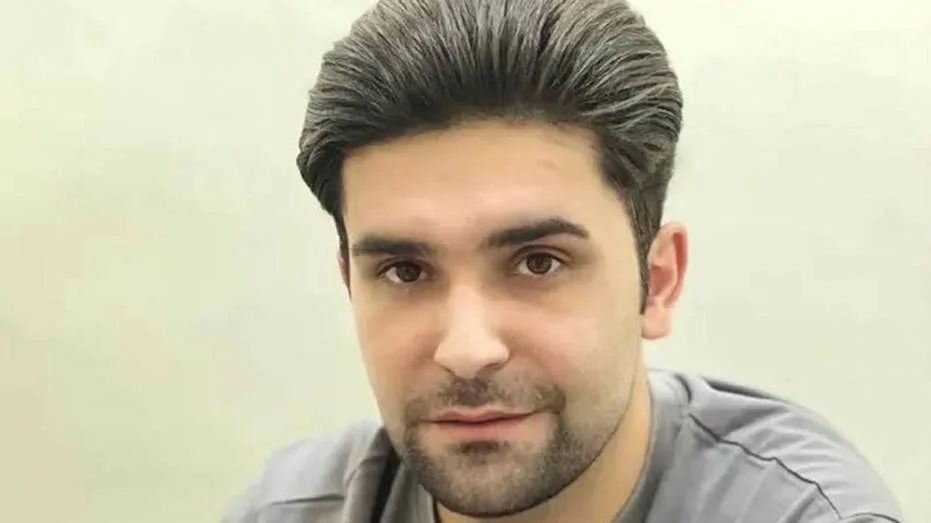
An Iranian psychologist who made a public appeal to then-President Donald Trump, urging him to support Iranians protesting the Islamic Republic, has been sentenced to seven months in prison. His family members assert that Iranian authorities attempted to compel him into creating a video that would disparage Trump and American citizens.
To prove your good intentions to the Iranian people, either do something without saying anything or act very quickly on your words, because many young people trust what you say. And, as you probably know, many things are useless to people who are dead.I assure you that the Iranian nation remembers good deeds well, and they will try to repay their friends in the future.
Ten days after this plea, on January 14, Seyedabdollahi was apprehended at his father's residence in Borujen, according to reports from Iran International, Iran Wire, the human rights activist news agency Harana, and the Hana Human Rights Organization. Hana reported that plainclothes agents confiscated phones and other electronic equipment during the arrest. Seyedabdollahi was subsequently held in solitary confinement and at an intelligence detention facility operated by the Islamic Revolutionary Guard Corps in Isfahan.
A relative stated, "Since that day, he has faced serious pressure from Iranian security authorities. He was arrested twice and subjected to repeated interrogations." The relative added, "During his detention, he spent extended periods in solitary confinement. He was eventually convicted and sentenced to seven months in prison, and in July 2026 he was transferred to prison to begin serving his sentence."
Arrest, Charges, and Allegations of Coercion
Branch One of the Borujen Revolutionary Court found Seyedabdollahi guilty of "engaging in media activities against national security," imposing a seven-month prison term and a five-year prohibition from government and public services, Iran International reported on August 6. He was re-detained on July 7 to commence his sentence and is currently held at Borujen Prison.
The Hana Human Rights Organization indicated that Seyedabdollahi was denied contact with his family for 17 days following his initial arrest, and his family was initially unaware of his whereabouts. Iran International also reported that he was denied access to a lawyer of his choice during his detention and was at times prevented from communicating with his family.
Iranian authorities have also initiated a second legal proceeding against Seyedabdollahi, alleging "propaganda against the establishment" or "propaganda against the system of the Islamic Republic." This case, which began in June, remains in the preliminary investigative phase, according to Hana.
"They told him you are a member of the CIA and Mossad and you took money from them for this job," a relative disclosed.
The same relative further alleged that Iranian authorities pressured Seyedabdollahi to record another video, retracting his initial message and criticizing Trump and Americans.
"He did not give in to numerous pressures to publish a clip that contradicted the first video," the relative stated. "He was asked to sexually insult Trump and make the American people look stupid and ignorant so that we could broadcast your clip on the national media."
The relative also claimed that Seyedabdollahi endured solitary confinement and mistreatment during interrogations, and continues to face pressure in prison for refusing authorities' demands. These specific allegations could not be independently corroborated.
"His situation in Borujen Prison is not good because he has been out of solitary confinement for a few days, but sometimes they take him to solitary confinement under various pretexts," the relative explained, noting that monitored telephone calls restrict his ability to openly discuss his treatment.
The five-year ban on public and government employment has intensified Seyedabdollahi's punishment, threatening his ability to secure work following his release, according to the relative.
"You understand the economic conditions of Iran. Now imagine that in this situation someone has been deprived of their social rights, i.e. job and income, and he is imprisoned," the relative remarked.
The relative described Seyedabdollahi as a psychologist and a sought-after speaker, popular among young Iranians. He reportedly remained focused on those who suffered more severely during the government's crackdown. During a brief period of freedom, the relative recalled him saying, "Don't feel weak. Our problems are insignificant compared to the thousands of people who have lost their lives."
Broader Context of Iranian Protests and Crackdown
Seyedabdollahi was among several Iranians who directly addressed Trump during the nationwide protests in January. Iran International reported that his video was posted on January 4, two days after Trump issued a warning to Iranian authorities against firing on peaceful demonstrators. Trump reiterated his warning to Tehran on January 9 and, on January 13, encouraged Iranians to continue protesting, asserting that "help is on its way."
Iran International documented that the government's crackdown led to widespread arrests, citing the U.S.-based Human Rights Activists News Agency, which reported over 50,000 arrests in a span of just over six weeks. The outlet also stated that Volker Türk, the U.N. human rights chief, reported at least 56 individuals had been executed on national-security-related charges since March 19, with 27 of these cases connected to the January protests.
The Iranian mission to the U.N. declined to offer any comment on the matter.