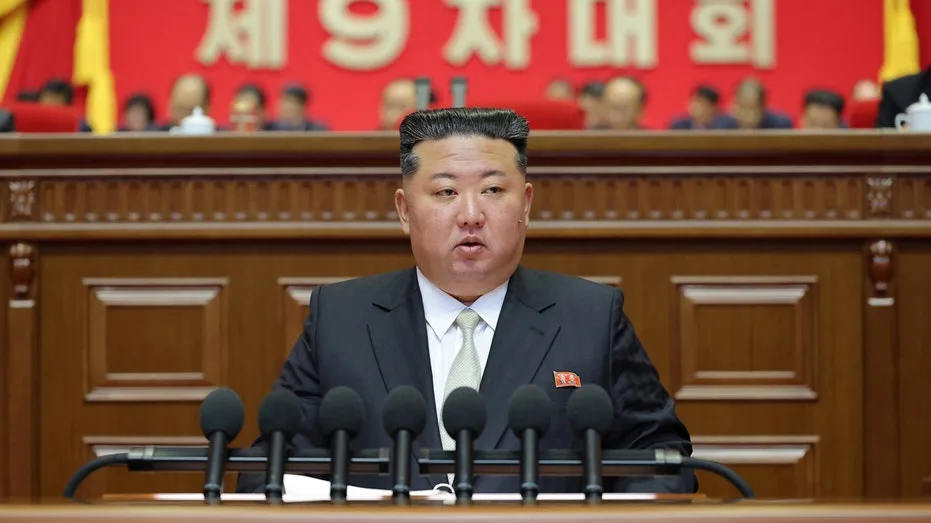
Pyongyang carried out another ballistic missile launch on Tuesday, marking its second such reported test within a week. Japan's Prime Minister's Office confirmed the latest launch, though immediate specifics regarding the missile's trajectory, range, or impact location were not disclosed.
The United States military is monitoring the situation and coordinating with its regional allies. "We are aware of the recent missile launch and are consulting closely with our allies and partners," U.S. Pacific Command stated. "Based on current assessments, these events do not pose an immediate threat to U.S. personnel or territory, or to our allies. The United States remains committed to the defense of the U.S. homeland and our allies in the region."
Recent Missile Activity
This recent test follows a short-range ballistic missile firing by North Korea on August 5, originating from its eastern Wonsan area. Following that earlier launch, Japanese Defense Minister Shinjiro Koizumi confirmed the missile landed in waters off North Korea's east coast, not reaching Japanese territory. Koizumi characterized Pyongyang's repeated missile launches as a threat to both Japan and the wider region, stating that Tokyo had conveyed a protest to Pyongyang through their respective embassies in Beijing.
South Korea's Joint Chiefs of Staff reported that the nation's military heightened its surveillance posture and collaborated with U.S. and Japanese forces after the August 5 incident. South Korea's presidential national security council denounced the launch as "a provocation" that violated United Nations Security Council resolutions, urging North Korea to cease its missile-related activities.
Impending Joint Military Drills
These missile launches are occurring just before the annual joint military exercises involving the United States and South Korea, which are typically scheduled for the latter half of August. The Ulchi Freedom Shield exercises, as they are known, are designed to enhance understanding among the Combined Forces Command, United States Forces Korea, the United Nations Command, and the Republic of Korea Joint Chiefs of Staff, alongside South Korean government agencies.
United States Forces Korea has described the exercises as crucial for "ensuring their ability to fortify the combined defense posture and enhance Alliance response capabilities against a spectrum of security threats." The drills are slated to incorporate "live, virtual, constructive and field-based training, engaging personnel from the various military services."
While officials from the U.S. and South Korea maintain that these training operations are defensive in nature, North Korea frequently portrays such exercises as preparations for an invasion and has historically responded to them with its own missile tests.
Historical Context of Provocations
The August 5 test was the first ballistic missile launch from North Korea since late June. During that earlier period, Pyongyang tested a tactical ballistic missile, which state media claimed carried a "special mission" warhead, among other armaments. Following those June tests, North Korean leader Kim Jong Un asserted that his military needed to strengthen its "deadly and destructive offensive posture."