The Indiana Hoosiers, reigning national champions, are actively navigating the complexities of an ongoing legal dispute between the National Collegiate Athletic Association (NCAA) and various plaintiffs. This court case holds substantial implications for the upcoming athletic season, particularly concerning player eligibility.
Currently, college athletes who commenced their careers in 2022 are grappling with a District Court judge's ruling in Colorado. This decision granted plaintiffs a preliminary injunction, effectively providing these players with an additional season of eligibility.
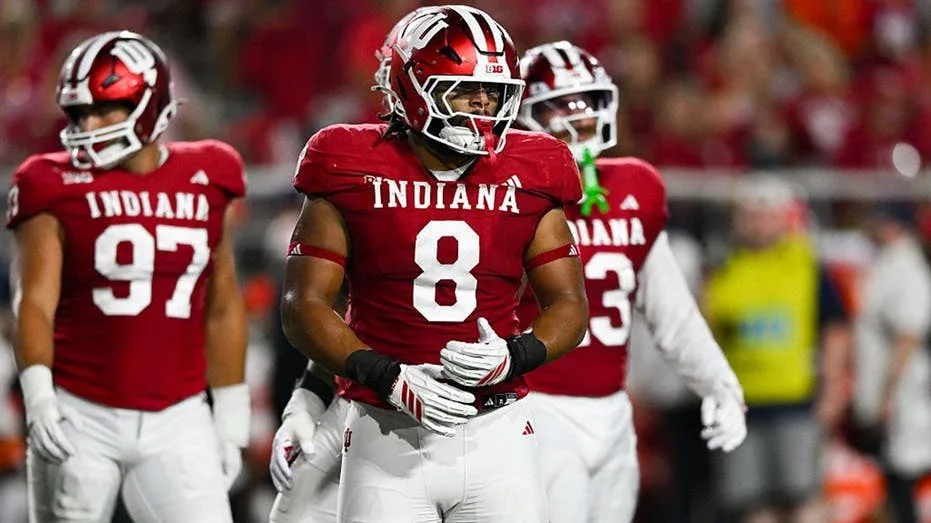
On Tuesday, the Hoosiers moved to capitalize on this fluid situation, which has many college programs across the nation scrambling to assess its potential roster benefits. They announced the return of star defensive lineman Stephen Daley to their team.
While the NCAA pursues an appeal against Judge Sweeney's ruling, institutions like Indiana are either securing the return of players who competed last season or investigating which former athletes they might be able to bring back for the impending season.
Judicial Intervention Reshapes Eligibility Landscape
The legal arguments presented in court primarily focused on the contention that athletes who had completed their fourth year of eligibility and would have been deemed ineligible under the prior regulations should have been granted a grandfathered status. This argument arose due to the manner in which the new eligibility process unfolded over the summer.
Legal representatives are challenging the NCAA in court, asserting that if the revised "Five and Five" rule (which allows athletes five years to play five seasons) was being implemented, then players who exhausted their eligibility clock last season under the old framework should be afforded the same rights as those entitled under the new guidelines.
Consequently, when Judge Charlotte Sweeney of the U.S. District Court of Colorado issued a class-wide preliminary injunction, mandating the NCAA to establish a blanket waiver granting all athletes from the 2022 class an additional year of eligibility for the upcoming academic year, it created a legitimate pathway for institutions to leverage this ruling.
Stephen Daley's Return to the Hoosiers
Following the Big Ten championship game last year, Stephen Daley sustained an injury, landing awkwardly on his leg during the celebration of their victory over Ohio State. This injury rendered him unable to participate in the 2026 NFL Draft, despite having led the conference and his team with 19 tackles for loss and 5.5 sacks.
Having already completed four seasons without utilizing a redshirt year, the former transfer sought and received medical clearance from the Indiana medical staff. He then opted to utilize the recent Colorado district court ruling to rejoin the team for an additional season.
NCAA's Stance and Appeal Efforts
A significant challenge for college athletic programs nationwide stems from the NCAA's ongoing appeal of this case. Scott Bearby, the NCAA's Chief Legal Officer, is daily endeavoring to provide guidance to member schools regarding what actions are presently permissible, contrasted with what could occur if the organization successfully secures a "stay" on appeal.
If the judge denies our motion for a stay, the NCAA will immediately ask the Tenth Circuit to enter a stay pending approval, including a request of the Tenth Circuit for what is know as an "administrative stay", which is an order pausing the injunction temporarily while the court decides whether to pause it for the duration of our appeal.
If any of our stay motions are granted, we will return to the status quo before Wisne, with the age-based eligibility rules being implemented as the membership intended.
The NCAA's position essentially warns that if a school adds a player to its roster during this period of legal permissibility, that athlete could subsequently be declared ineligible should the court rule in the NCAA's favor on appeal.
Widespread Impact Across College Athletics
This period marks one of the most intricate in the history of college athletics, largely precipitated by athletes across the country pursuing legal action against the NCAA over its implementation of the new "Five and Five" rule, which grants athletes five years to participate in five seasons.
When questioned on Tuesday about his football staff's approach to potentially adding players from the 2025 roster who technically retained eligibility due to the court decision, Tennessee head coach Josh Heupel indicated the institution was still exploring its options.
Yeah, we're in exploration. Some of the details and what it's all going to look like still is being worked through, but looking at those things.
Nevertheless, football coaching staffs throughout the sport have been actively contacting players to gauge the risk-benefit of bringing back an athlete without certainty that the eligibility ruling will persist for the entirety of the upcoming season.
This period has been notably tumultuous, particularly within the basketball community, as more lawsuits continue to emerge at the state level. Numerous players have already been granted eligibility through court rulings, with further developments anticipated.
While athletic conferences and the NCAA hope for the passage of the "Protect College Sports Act" through the Senate and into the House, the level of confusion surrounding the collegiate athletics landscape has only intensified.