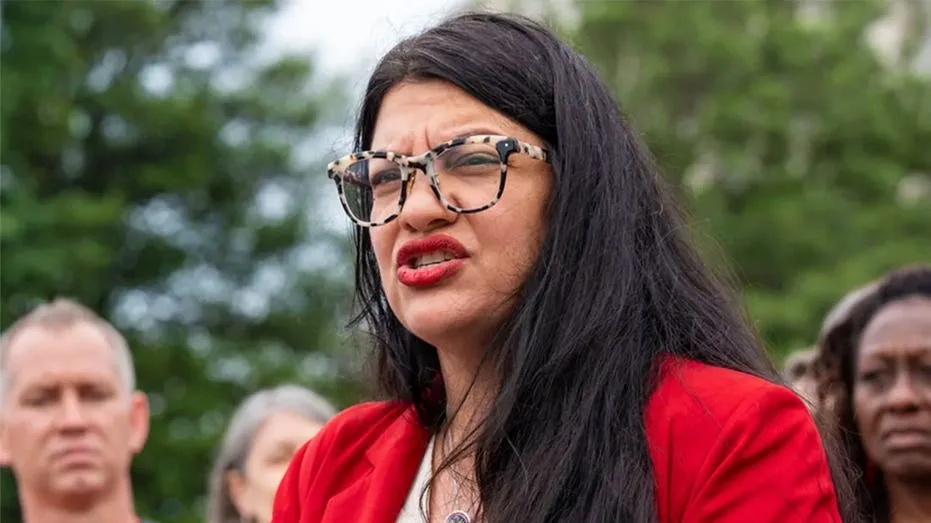
Tlaib's Primary Victory Extends Progressive Wave
Representative Rashida Tlaib, a Democrat from Michigan and a leading voice within the congressional progressive caucus known as the "Squad," successfully won the Democratic primary for the 12th Congressional District on Tuesday evening. This victory paves the way for her to seek re-election for a fifth term.
Tlaib’s primary win over Michigan state legislator Shanelle Jackson and Inkster Mayor Byron Nolen is part of an ongoing series of successes for progressive candidates. The Democratic Party’s left-leaning faction has experienced notable triumphs in recent primary elections, consolidating its coalition’s strength and broadening the range of ideological stances within the party.
When Representative Tlaib and her fellow "Squad" members first entered the House of Representatives in 2019, their campaigns were distinguished by their distinctly left-wing viewpoints. Representative Tlaib, alongside Representative Alexandria Ocasio-Cortez (D-N.Y.), particularly drew attention due to their affiliation with the Democratic Socialists of America (DSA).
Eight years later, the DSA has once again endorsed Tlaib's candidacy.
"For years, Rashida has been a strong voice in the halls of the Capitol, unapologetically standing up for the working class everywhere. Fighting for affordable housing, for clean air and water, for an end to the genocide in Gaza, and so much more – Rashida is a beacon of hope and courage for those in her district and across the world," the organization stated in support.
Expanding Influence of the Far-Left
Beyond established figures like Tlaib, the DSA has significantly expanded its reach. This growing influence is evident in primary contests such as that of socialist Darializa Avila Chevalier in New York, who defeated incumbent Representative Adriano Espaillat (D-N.Y.), the veteran chair of the Congressional Hispanic Caucus. Another example is Melat Kiros, a socialist in Colorado, who unseated 30-year incumbent Representative Diana DeGette (D-Colo.). These outcomes demonstrate the expanding impact of progressive politics within the Democratic Party.
This current trend marks a significant turnaround from the party’s internal discussions following the disappointing 2020 congressional election results, which left Democrats with reduced majorities in both the House and Senate. At that time, some party members attributed the setbacks to the embrace of more radical policies.
"Don’t say socialism ever again. We need to get back to the basics," then-Representative Abigail Spanberger (D-Va.) reportedly commented.
However, Representative Tlaib and other progressives within the party countered this perspective, asserting that their platforms would ultimately define the future direction of the party. In a widely circulated memo dated November 10, 2020, they argued that progressive policies would attract an expanded base of voters.
"We need a new generation of leadership grounded in a multiracial, working-class experience and background," the memo emphasized.
"As we speak, congressional Democrats are debating why they underperformed and some have been quick to blame progressives. There is no denying Republicans levied salient rhetorical attacks against Democrats, but these will continue to happen as they do every cycle."
In comments to Politico at the time, Tlaib articulated that the progressive platform could tap into a populist sentiment within the Democratic Party, drawing parallels to the populism she observed in Donald Trump's appeal among Republicans.
"If we truly want to unify our country, we have to really respect every single voice. We say that so willingly when we talk about Trump supporters, but we don't say that willingly for my Black and Brown neighbors and for LGBTQ neighbors or marginalized people," Tlaib stated.
Looking Ahead to the General Election
Having once again secured the Democratic nomination, Representative Tlaib is now set to advance to the general election on November 3, 2026, where she is widely anticipated to win. Her previous re-election in 2024 saw her secure a significant victory against Republican challenger James Hooper, with Tlaib receiving 69.7% of the vote compared to Hooper’s 25.4%.