US Intelligence Suggests Russia Could Target NATO Ally to Test Alliance Cohesion
A new US intelligence assessment indicates Russia might launch a limited assault on a NATO member nation within the next few years, aiming to fragment the organization and challenge its collective defense clause.
World·
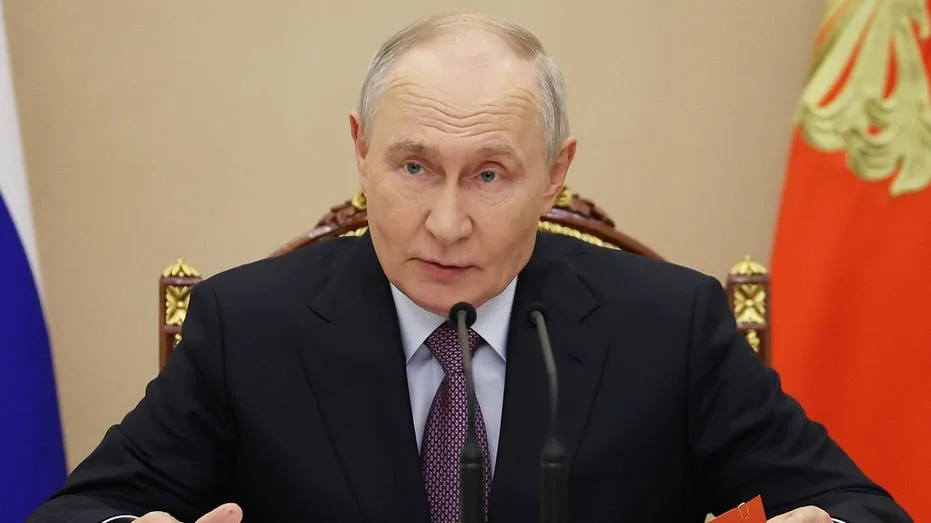
New intelligence insights from the United States suggest that Russian President Vladimir Putin could initiate an attack on a member country of the North Atlantic Treaty Organization (NATO) in the coming years. This potential action is seen as an attempt to fracture the post-World War II alliance and test the resolve of its fundamental Article 5 defense pact.
While earlier US intelligence assessments had concluded that Putin would likely refrain from assaulting a NATO nation while Russia remained engaged in the conflict in Ukraine, the current evaluation reflects a shift. As Ukrainian forces achieve successes, the Russian president is reportedly seeking a decisive victory, and both the United States and European nations have observed growing indications of Russia probing the alliance's vulnerabilities.
These perceived tests include an unmanned aerial vehicle (UAV) impacting a Romanian apartment complex in May and cruise missiles landing in Poland late last month. Both Romania and Poland are NATO member states.
Understanding Article 5 and Potential Scenarios
Article 5 of the NATO treaty unequivocally states that an armed attack against one member is considered an attack against all members, triggering a collective response.
The intelligence assessment indicates that any such Russian action would likely be a limited attack. This could range from a sophisticated cyberattack to a minor land incursion, with the Baltic states or Poland identified as probable targets. The timeframe for this potential aggression is broad, spanning from the fall of the current year through 2029.
Heather Conley, a senior fellow at the American Enterprise Institute, noted the critical uncertainty surrounding such a scenario. "The question mark is how the United States would respond in that case," Conley remarked, highlighting Russia's consistent objective to undermine NATO's credibility and create divisions between the United States and its European allies.
US Military Preparedness Amidst Claims
This assessment also emerges alongside assertions that the United States' munitions stockpiles have been diminished due to military aid provided to Ukraine and ongoing involvement in the conflict in Iran.
However, Chief Pentagon spokesman Sean Parnell has vehemently dismissed these claims as unfounded. "We have everything required to strike at the time and place of the president’s choosing," Parnell affirmed. He further elaborated, "Across multiple combatant commands, we have already executed successful operations while maintaining a deep, ready arsenal to defend our people and our interests. Any adversary who confuses media noise with American weakness will discover the truth the hard way."
Navigating Sub-Article 5 Actions
A direct land incursion by Russia was considered the least probable scenario, primarily because it would directly invoke Article 5, necessitating a strong, unified response from the alliance. Nevertheless, the appropriate reaction to less overt acts, such as a major cyberattack, remains less clear.
Conley further explained the inherent dilemma for the alliance: "This has always been NATO’s challenge to respond to a sub-Article 5 attack, and it’s been very true that to this point, NATO allies have preferred not to escalate."
Colonel Martin O’Donnell, a spokesperson for NATO, conveyed the alliance's proactive approach to security. He stated, "We are always thinking through and preparing for any number of scenarios. NATO is watching, and we are ready to deter and defend as necessary, which we continue to demonstrate."
Related Stories

Abelardo de la Espriella Sworn In as Colombia's President, Signaling Major Policy Reversal
Colombia has inaugurated Abelardo de la Espriella as its new president, marking a significant conservative pivot in Latin American politics. De la Espriella promises to reverse prior left-wing policies, focusing on
Aug 8

Deadly Incident on Russian Black Sea Beach: Conflicting Accounts Emerge After Drone Strike Kills Seven
Seven people, including four children, died and dozens were injured after a projectile struck a crowded beach in Arkhipo-Osipovka, Russia. Russian authorities claim a Ukrainian drone targeted civilians, while Ukraine
Aug 6
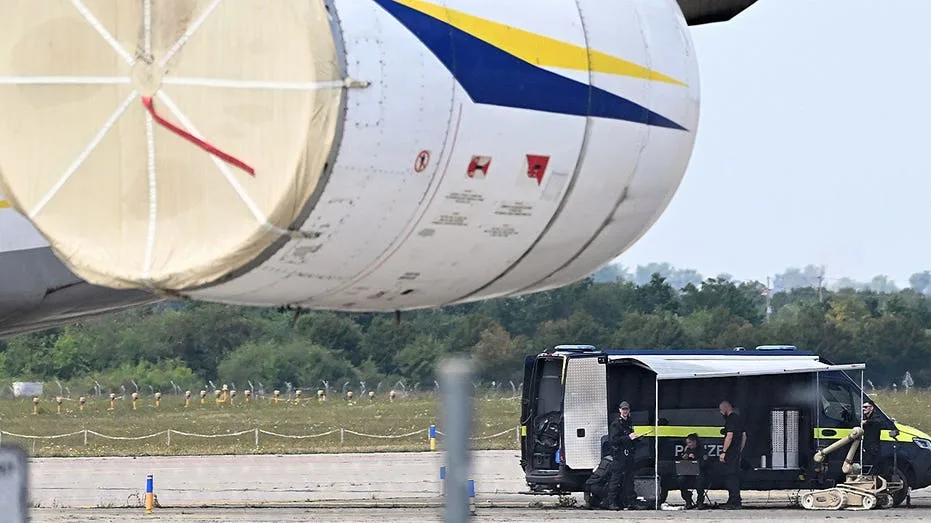
Explosive Drone Discovery Forces Shutdown at Major German Airport, Diverts Flights
Operations at Germany's Leipzig/Halle Airport were disrupted after an explosive-laden drone was discovered near a Ukrainian aircraft. The incident, deemed a "new threat scenario" by officials, prompted runway closures
Aug 5

Ancient Solomon's Pools Spark Modern Dispute Over Heritage and Jurisdiction
Solomon's Pools, an ancient water system supplying Jerusalem for millennia, are now at the heart of a political conflict. Israeli officials allege the Palestinian Authority, which holds jurisdiction, has allowed the
Aug 4