Supreme Court Urged to Expedite White House East Wing Construction Amid Security Concerns
Chief Justice John Roberts faces an urgent appeal to allow vital renovations at the Executive Mansion to proceed, overturning lower court rulings that have stalled progress.
Opinion·
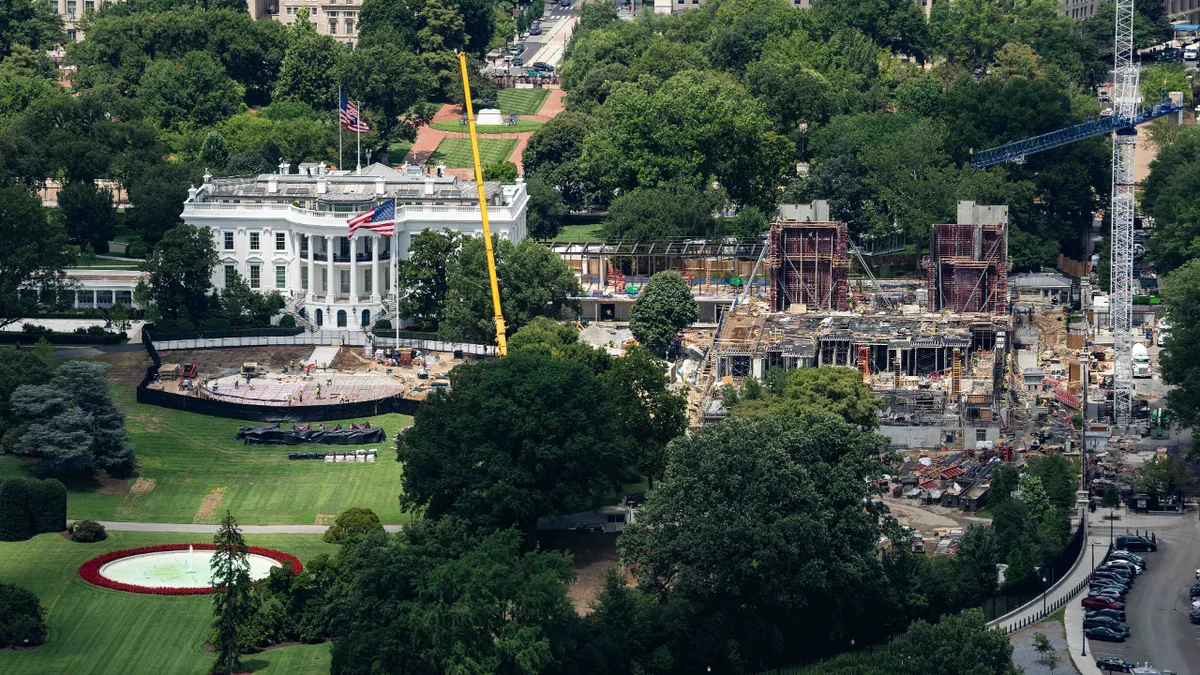
The U.S. Supreme Court's Chief Justice John Roberts is currently considering an application for a stay against an order from the United States Court of Appeals for the District of Columbia Circuit. This order has upheld a specific, detailed construction timeline for the above-ground rebuilding of the White House East Wing. The schedule, set by U.S. District Judge Richard Leon, dictates what can and cannot be constructed in the replacement structure for the previously demolished East Wing.
The original East Wing, built in 1902 and significantly expanded in 1942 under President Franklin D. Roosevelt, included underground facilities such as the Presidential Emergency Operations Center. The author notes that an emergency center dating back 84 years is inherently outdated.
Judicial Intervention in Executive Authority
Judge Leon's order, affirmed by the D.C. Circuit, has effectively directed the President on permissible construction within the Executive Mansion grounds. While acknowledging Judge Leon's long and generally respected tenure since his appointment by President George W. Bush in 2002, the author characterizes this particular ruling as a significant misstep.
A comprehensive dissent to the circuit court's lengthy opinion was issued by Judge Neomi Rao, widely regarded as a brilliant legal mind on the D.C. Circuit. Following this, the Department of Justice formally requested Chief Justice Roberts to stay both the Circuit Court's and Judge Leon's orders. Justice Roberts has subsequently requested a response from the National Trust for Historic Preservation, the entity that brought the original case, due by noon EDT on Tuesday, August 18, 2026.
The author expresses hope that the Chief Justice will grant the stay by the close of business on Tuesday, August 18, 2026, explicitly allowing construction to resume unless the Supreme Court itself orders a halt. A key concern raised is the "standing issues" that, in the author's view, should have prevented the courts from delving into the merits of the case. Furthermore, the central point of contention revolves around presidential authority over the Executive Mansion, its surrounding grounds, and other associated structures critical to the role of Commander-in-Chief.
The Argument for National Security
The author asserts that this case is not a close call, suggesting that a concise opinion should affirm the urgent necessity for the President—and all future presidents—to maintain authority over their residence, office, and national security facilities within the White House complex, as well as related sites like Camp David.
Ignoring the rapidly evolving threats to the White House and any facility frequently used by a president is deemed recklessly unreasonable and contrary to common sense. Judge Rao’s dissent, while persuasive, is considered too extensive. The notion that a bureaucratic process must govern changes to White House facilities, Camp David, or any national security installation vulnerable to evolving enemy capabilities is dismissed as impractical. The author advocates for clear, direct rulings that restore a pragmatic understanding of the threats facing the nation.
Constitutionally, the author argues that the establishment of the Executive branch as a separate and equal power, alongside the designation of the President as Commander-in-Chief, inherently grants the necessary and proper authority to execute laws and manage the facilities essential for military command and control.
The context for this case extends beyond historical attempts on presidential lives to include the rapid advancements in surveillance technology that require countermeasures, and the astonishing development of threats from drones and hypersonic missiles over the past three years. The author contends that the current and future presidents should not face impediments in securing their homes, offices, and national security sites against a dramatically escalating threat matrix.
Historical events underscore this need; for instance, Vice President Dick Cheney was physically evacuated from his West Wing Office on September 11, 2001, to a secure location. The author prompts reflection on the purpose of the new East Wing's underground construction, implying a vital security function.
Urgent Call for Supreme Court Action
The potential consequences of a successful attack on the White House due to delayed necessary defenses, caused by what the author terms "ridiculous litigation," are highlighted as severe. The author posits that political motivations may underlie the protracted legal challenge, suggesting that some may seek to undermine the Commander-in-Chief's authority over vital command structures and security arrangements. Despite this, the Supreme Court is urged to act swiftly to resolve the situation.
While most Americans, including the highest court, might prefer to enjoy the remainder of their summer break before the October term, the author emphasizes that national security threats do not pause. The Supreme Court is reminded of its constitutional duty to interpret the nation's founding document, asserting that common sense regarding the Constitution should lead to the granting of the stay and the resumption of construction according to the design approved by the President, following consultations with the Secret Service and the Pentagon.
Related Stories
Hasan Piker's Influence Highlights Democratic Strategy to Reconnect with Young Men
Online streamer Hasan Piker, known for controversial views, has become a focus for Democrats grappling with how to engage young male voters. His rise underscores the party's struggle to connect with a demographic
Aug 18
America's Cumbersome Permitting System Fuels Rising Cost of Living
Lengthy and unpredictable government approval processes for new projects across various sectors are directly contributing to higher costs for consumers. Delays in construction, infrastructure, and manufacturing inflate
Aug 17

Voters Prioritize Personal Financial Well-being Over Macroeconomic Data, Experts Suggest
Politicians often focus on GDP and inflation, but voters are more concerned with their personal finances: grocery bills, gas prices, and housing costs. This individual economic reality, not broad statistics, drives
Aug 17

America's Innovation Edge Needs More Than Ideas: Manufacturing and Capital Investment Are Key
True innovation extends beyond initial breakthroughs, demanding substantial capital investment in manufacturing facilities, skilled workforce development, and resilient supply chains. This holistic approach is crucial
Aug 14