Thursday brought another series of joint practices across the NFL, marked by multiple altercations between teams, notably an incident involving the Miami Dolphins and New York Giants where quarterback Jameis Winston was reportedly struck. This particular clash seemed to escalate significantly when Winston became entangled in the commotion, reportedly taking down an opponent, which in turn prompted another individual to retaliate against him. This chain of events drew Giants starting quarterback Jaxson Dart into the fray.
"I just looked over and saw the red 19 jersey (which is Winston) and I was like, 'I got to go,'" Dart said. "I got to go help my boy! I don't know what's going on over there."
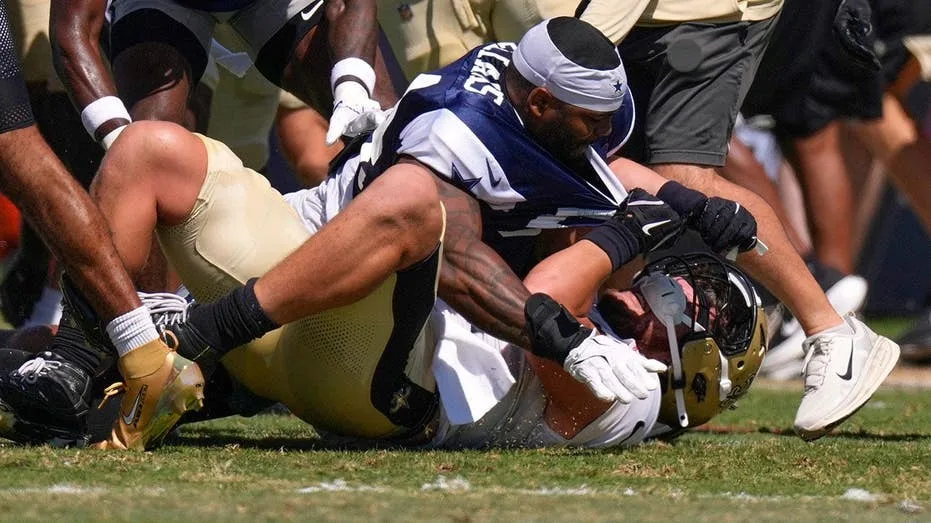
The league has signaled its strong disapproval of these incidents, although critics contend its response doesn't go far enough. On Thursday, the NFL imposed substantial fines of $500,000 each on the Dallas Cowboys and the New Orleans Saints, following their involvement in a significant brawl during a joint practice session the previous day.
The NFL highlighted that its Competition Committee has consistently emphasized sportsmanship, particularly concerning conduct during joint practices, in recent seasons. This summer, all 32 clubs were again reminded of this crucial directive. While these significant financial penalties represent a clear effort to reduce such aggressive behavior, many argue they do not fully address the root cause.
The repeated altercations witnessed this week underscore a critical need for both the NFL and the NFL Players Association to consider direct financial penalties for players involved in misconduct during training camp practices, mirroring the consequences they face in preseason and regular-season games.
Escalating Incidents Across the League
It is noteworthy that Thursday marked the fourth consecutive day where teams engaged in joint practices became involved in physical confrontations, whether described as fights, scuffles, or skirmishes. The Philadelphia Eagles and New England Patriots also engaged in altercations over the preceding days, despite explicit warnings from both coaching staffs for their players to avoid such incidents during the practice sessions.
Patriots coach Mike Vrabel stated, "I don’t want anybody fighting. I don’t want our guys fighting in practice. I don’t want them throwing punches." Vrabel further emphasized the consequences in game situations, noting, "They get thrown out of the game when those things happen."
Elsewhere on Thursday, the joint practice between the Chicago Bears and the Cincinnati Bengals also saw multiple scuffles. A significant incident occurred when Bears receiver Ray-Ray McCloud appeared to throw a punch at a Bengals defensive back, leading to several Bengals players dogpiling on McCloud.
Further south in Miami Gardens, the joint practice featuring the New York Giants and Miami Dolphins also devolved into brawling. Several players from both the Giants and Dolphins were ejected or benched from the practice session for either directly throwing punches or inciting others to do so. These disciplinary actions were intended to de-escalate tensions and prevent future incidents.
Critique of Existing Deterrents
However, critics argue that being removed from a hot, humid, and strenuous practice session is often not perceived as a punishment by players. For many, particularly seasoned veterans, it can even be a welcome break. Similarly, fining the entire club is unlikely to compel individual players to control their emotions or refrain from reacting to perceived provocations. It is suggested that players will not significantly alter their behavior simply due to coaching directives or financial penalties imposed on their team.
Advocating for Individual Player Fines
The most effective approach for teams and the NFL to tackle this persistent problem, according to observers, is through direct financial penalties on individual players. If teams are unwilling to implement such measures, the league itself should intervene. Players typically exhibit more restrained conduct during regular-season and preseason games precisely because engaging in such behavior incurs direct fines deducted from their earnings.
The league's official compliance guidelines explicitly state that its enforcement staff is responsible for overseeing player conduct during preseason, regular-season, and postseason games, specifically identifying fighting as an act falling within its disciplinary jurisdiction. This explicit jurisdiction, however, does not currently extend to joint practice sessions. Therefore, while the NFL's actions on Thursday represent a significant step, it is widely believed that players will likely continue to engage in joint practice skirmishes until financial consequences are directly applied to them.