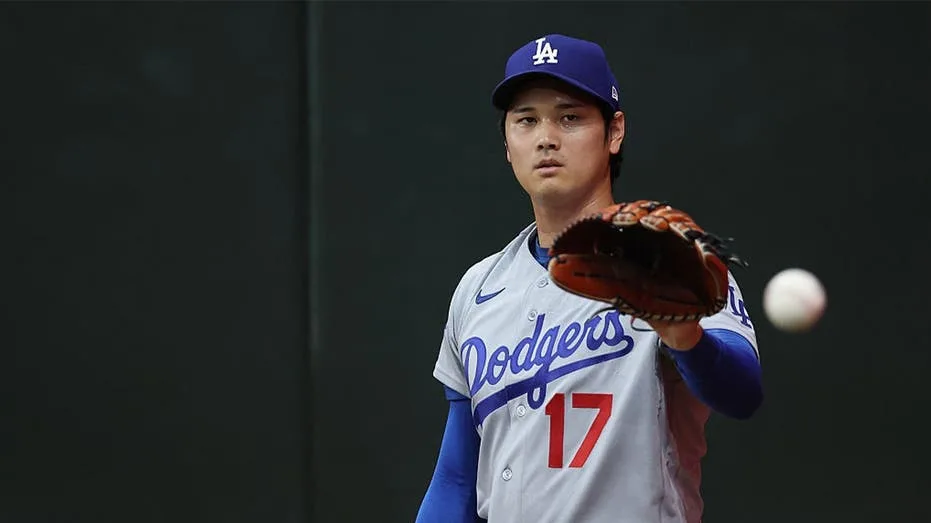
The Los Angeles Dodgers have recently been characterized by some as a dominant force in baseball, often dubbed a "superteam." This perception intensified following the acquisition of Shohei Ohtani in late 2023, alongside other significant signings like Yoshinobu Yamamoto, Teoscar Hernandez, and Tyler Glasnow. While the team's hypothetical success in the 2024 and 2025 World Series, and subsequent reported additions of players such as Tanner Scott, Blake Snell, Roki Sasaki, Kyle Tucker, and Edwin Díaz, fueled a narrative that their roster was virtually unbeatable, recent performance has presented a different picture.
For instance, reports from August indicate Kyle Tucker has performed below average as a hitter, and Edwin Díaz has recorded an earned run average around 12. The Dodgers recently experienced a challenging 2-11 stretch in games against the Boston Red Sox, Chicago Cubs, and Milwaukee Brewers. Notably, the Brewers, despite having one of the lowest payrolls in baseball, currently hold the best record in the league and a tiebreaker advantage over Los Angeles for the top spot in the National League.
The Dodgers' significant financial resources and consistent ability to assemble competitive rosters have cultivated a segment of fans who view the team as an antagonist. These fans often express a preference for teams that do not pursue extensive player acquisitions, suggesting that billionaire owners should retain profits rather than invest heavily in player salaries. This sentiment was amplified when news emerged of a federal investigation into Mark Walter, a co-owner of the team, concerning a series of loans linked to insurance companies he owns and manages.
Federal Scrutiny on Mark Walter's Financial Practices
The specifics of the ongoing investigation are complex. In essence, two insurance companies under Walter's control reportedly utilized investor funds for private-credit transactions, essentially providing direct loans to various businesses. Some of these businesses were also affiliated with or controlled by Walter. While this practice is not entirely unprecedented, the reported scale of these investments allegedly surpasses typical industry standards, raising questions regarding their disclosure to investors. The potential value of these loans is substantial, with some estimates ranging from $16 billion to $20 billion. Such an amount is significant even for an individual of Walter's wealth, potentially explaining why he reportedly sought to sell the Los Angeles Lakers for $12.5 billion after owning the team for only a year.
Debunking Misconceptions About Player Contracts and Deferrals
In response to the investigation, certain online communities, particularly on social media platform X, have inaccurately asserted that the Dodgers' payroll and team construction are based on fraudulent activities. A prominent claim suggests that the substantial deferrals within Shohei Ohtani's contract are part of a Ponzi scheme. However, these assertions are incorrect and misrepresent the scope of the federal investigation. Such viral posts are misleading, whether due to a lack of understanding or intentional misinformation.
For example, the notion that the Dodgers originated deferred contracts or uniquely leveraged them to sign Ohtani is inaccurate. Deferred compensation has been a standard practice in Major League Baseball for decades, with most teams having either utilized or currently employing this strategy. Numerous players across the league have significant deferred earnings, including Rafael Devers ($75 million), Jose Ramirez ($70 million), Alex Bregman ($70 million), Corbin Burnes ($64 million), Dylan Cease ($64 million), Max Scherzer, Anthony Santander, Francisco Lindor, Nolan Arenado, Christian Yelich, Giancarlo Stanton, Framber Valdez, Christopher Sanchez, and Devin Williams.
While the Dodgers have employed deferred contracts more extensively than some other teams, the belief that these deferrals offer a "free" financial advantage is mistaken. MLB rules mandate that teams set aside the present value of deferred amounts into specific accounts, typically within two years of the season the money was earned. Organizations cannot simply postpone all financial obligations indefinitely; these amounts must be accounted for in the present day.
The widespread misunderstanding regarding Ohtani's contract deferrals originated from his specific deal. It was Ohtani himself who proposed the arrangement of receiving $2 million in annual salary with the remaining $68 million deferred, not the Dodgers who demanded it. Furthermore, he presented this identical offer to all prospective teams, including the San Francisco Giants, Toronto Blue Jays, and Los Angeles Angels. The Dodgers, Blue Jays, and Giants accepted his terms, while the Angels did not. Had Ohtani chosen the Blue Jays, they would have been responsible for the $680 million in deferred payments.
Deferrals are not solely advantageous for team ownership. For players residing in high-tax states like California or New York, deferring income until after their playing careers can result in substantial tax savings. The deferred funds are securely held in designated investment accounts, allowing players to receive substantial current paychecks while also securing tens of millions annually in retirement, particularly if they relocate to states with lower income tax rates such as Florida or Arizona.
Another perceived controversy involves the Dodgers, and by extension Walter, owning a stake in the Spectrum SportsNet LA channel. This arrangement is also common in modern sports financing. For instance, the New York Yankees also hold partial ownership of the YES Network, alongside other investment groups like Main Street Sports Group, Amazon, The Blackstone Group, and Red Bird Capital Partners.
It is also important to note that Walter's ownership stake in the Dodgers is 27%, with the remaining shares distributed among other members of the Guggenheim Partners group and various individuals. Should Walter need to divest his portion, 73% of the current ownership would remain intact.
Understanding Dodgers' Financial Advantages
Despite opposing fans' claims on social media that the Dodgers are financially distressed or bankrupt, these assertions lack accuracy. Recent reports indicated the Dodgers were the first MLB team to surpass $1 billion in annual revenue. While their television deal is often cited as the sole driver of their financial superiority, it averages approximately $325 million per year. This means at least $675 million in revenue is generated from other income streams.
The team also benefits from an MLB rule that exempts a portion of their television income from the league's revenue-sharing program, which distributes funds to smaller market teams. This exemption stems from the team's bankruptcy under former owner Frank McCourt. Estimates suggest this allows the Dodgers to retain approximately $55 million to $60 million annually. If this sum were to be divided among the other 29 teams, it would amount to only about $2 million per team per year, a figure insufficient to significantly narrow the league's payroll disparity.
The widespread animosity toward the Dodgers often stems from their ownership group's demonstrated commitment to winning and their front office's strategic team-building capabilities. Other teams, such as the New York Mets, spend comparable or even greater amounts, utilize deferred contracts, and have signed some of the most lucrative contracts in sports history. However, their lack of consistent success means they do not attract the same level of criticism.
Ultimately, facts often take a backseat to anger and outrage in public discourse. Even if the Dodgers' television deal were half its current value, they would still have generated over $830 million in 2025. Walter's potential sale of his 27% stake would not lead to the team's financial collapse. Furthermore, the deferred contracts are unrelated to Walter's insurance company loans, and nothing about these contracts is illegal or violates MLB regulations. Yet, for many in the critical public, these realities often hold little sway.