Attorney General Todd Blanche Rejects Pledge for Absolute DOJ Independence, Citing Presidential Policy Priorities
Newly confirmed Attorney General Todd Blanche stated that the Justice Department must remain capable of executing lawful presidential policy directives, declining to vow complete independence from the White House.
Media·
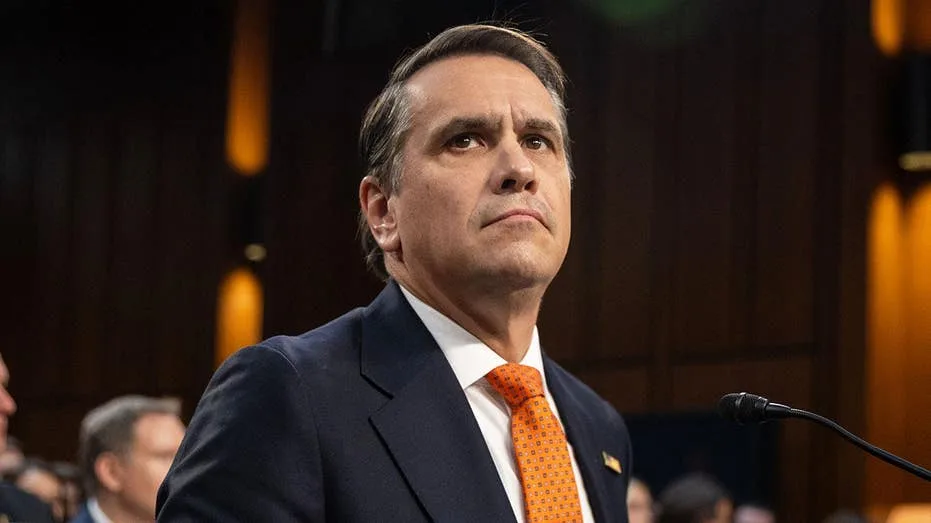
During a recent television interview, newly confirmed Attorney General Todd Blanche declined to promise that the Department of Justice (DOJ) would operate entirely independently of the White House. He asserted that such a pledge is inappropriate for any attorney general, as the department must retain the capacity to implement legitimate presidential policy objectives.
"No, I’m not going to pledge that. And no attorney general should ever pledge that," Blanche stated.
Blanche drew a distinction between lawful presidential guidance, such as former President Donald Trump's directive to address violent crime, and improper political interference in specific legal cases. He explained that if a president instructs the DOJ to target violent criminals nationwide, as Trump has done, an attorney general should not refuse to comply.
"If President Trump says, ‘I want the Department of Justice to go after every violent criminal in this country,’ which is what he has said, what you’re saying to me is I should say, ‘No, sir, I’m not going to do it,’" Blanche elaborated.
The Justice Manual, which outlines the department's own regulations, supports the distinction Blanche described. It allows for coordination between the White House and the DOJ on policy matters unrelated to ongoing cases, while restricting contact concerning specific cases to senior officials. This measure aims to safeguard enforcement decisions from partisan or undue influence.
Consistency in Stance and Upholding the Law
Blanche’s position aligns with statements he made during his confirmation hearing in July. When Senator Chris Coons (D-Del.) questioned the Justice Department’s independence from the White House, Blanche offered a similar response.
"The Department of Justice, like every single Department in the executive [branch], is part of the executive," Blanche affirmed, emphasizing that the DOJ is an integral component of the executive branch.
He further elaborated on this perspective, questioning whether the department’s focus should diverge from the policy objectives of an elected president. "DOJ is part of the executive branch. Are you suggesting that the focus of the Department should not align with the policy goals of the President, who was elected by the American people? Elected because the people voted for the priorities of that President," Blanche asked.
When pressed on whether he would comply if President Trump directed him to cross an ethical or legal boundary, Blanche rejected the premise outright, pointing to his constitutional oath. "He never has. He never will," Blanche asserted. "I swore to the Constitution of the United States like every cabinet secretary has done and like every attorney general before me has done."
A spokesperson for the Justice Department noted that the Attorney General has publicly addressed these matters extensively.
Previous Scrutiny Regarding DOJ Interactions
Past incidents have highlighted the complexities of interactions between the White House and the Justice Department. Records from the FBI, released by Senate Judiciary Committee Chairman Chuck Grassley, revealed that officials in the Washington Field Office initially indicated they lacked probable cause for a search warrant related to former President Trump and preferred seeking his cooperation through a consensual search. However, the DOJ’s Counterintelligence and Export Control Section maintained that probable cause existed and proceeded with the warrant request, which a federal magistrate subsequently approved before the August 2022 search.
Another FBI communication from May 2022 indicated coordination among the DOJ, the White House Counsel’s Office, and the National Archives during the investigation into classified records. Plans for interviewing Trump aide Walt Nauta were dependent on the timing of a briefing for President Biden and required coordination between White House Counsel and the DOJ. Publicly reported excerpts of this communication pertained to the Nauta interview and questions of executive privilege, rather than an explicit White House directive for the subsequent search.
The National Archives confirmed that the White House transmitted a statutory request, supported by the DOJ, for the FBI to access 15 boxes returned by Trump. However, NARA clarified that this process was distinct from the later search and that the Archives had no prior knowledge or involvement in it.
Blanche later indicated he would consider a president's views on an individual prosecution but would ultimately uphold his own judgment regarding what he believes is right. He also denied that the president directs him to prosecute specific individuals.
Confirmation Opposition and Pledge to Workforce
Blanche’s confirmation faced opposition from some Senate Republicans who sought for him to withdraw a $1.8 billion anti-weaponization fund and to narrow IRS audit protections for Trump and his family. Ultimately, Senators Susan Collins (R-Maine) and Lisa Murkowski (R-Alaska) joined all Senate Democrats in voting against his nomination.
Senator Collins expressed her concerns, stating, "Mr. Blanche has taken several actions that have further eroded the Department’s independence, and that is the basis for my vote to oppose his confirmation."
During his first address to DOJ employees as Attorney General on a recent Thursday, Blanche sought to reassure the workforce by pledging fair and impartial enforcement of the law.
"I promise you that I will lead this department with integrity," Blanche said. "I promise you that I will focus on our core mission, which is to uphold the rule of law fairly and impartially."
Related Stories
Michigan Congresswoman Haley Stevens Urges Senate Nominee El-Sayed to Distance from Streamer Hasan Piker
Representative Haley Stevens has called for Michigan Democratic Senate nominee Abdul El-Sayed to cut ties with Hasan Piker. Stevens, who lost to El-Sayed in the primary, believes this move will help El-Sayed appeal to a
Aug 17
Hakeem Jeffries Rejects Medicare for All and DSA Platform Amid Progressive Primary Gains
House Minority Leader Hakeem Jeffries stated his current opposition to Medicare for All and the DSA platform, despite past co-sponsorship. This comes as Representative Ro Khanna advocates for universal healthcare,
Aug 16
Former ABC News Correspondent Acknowledges Network's Liberal Stance and Lack of Viewpoint Diversity
Former ABC News correspondent Terry Moran recently admitted the network leans liberal and faced challenges understanding Donald Trump's base, attributing this to a lack of diverse political perspectives in its newsroom.
Aug 16
Former Cambridge Professor Jason Arday Dies Following Plagiarism Scandal and Resignation
Jason Arday, a former Cambridge University professor, has been found dead, according to reports. His passing follows his recent resignation from the prestigious institution amidst an international controversy involving
Aug 14