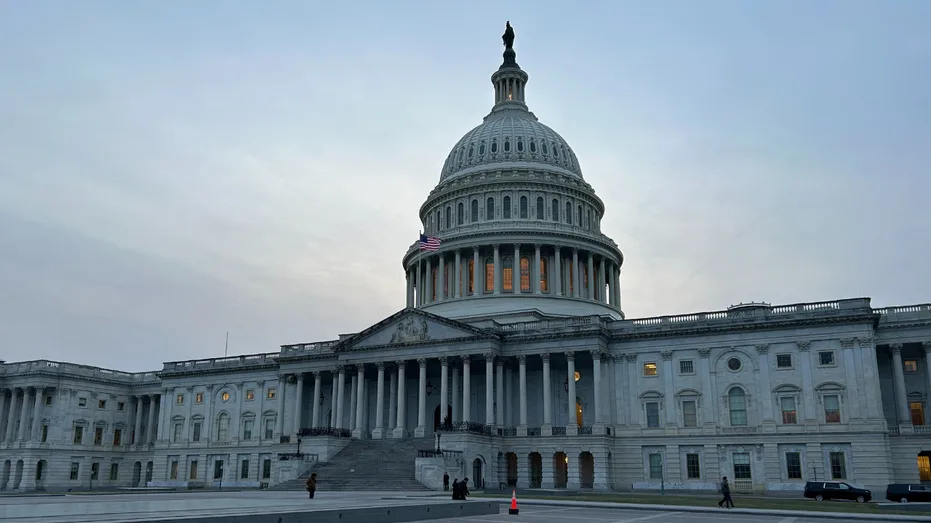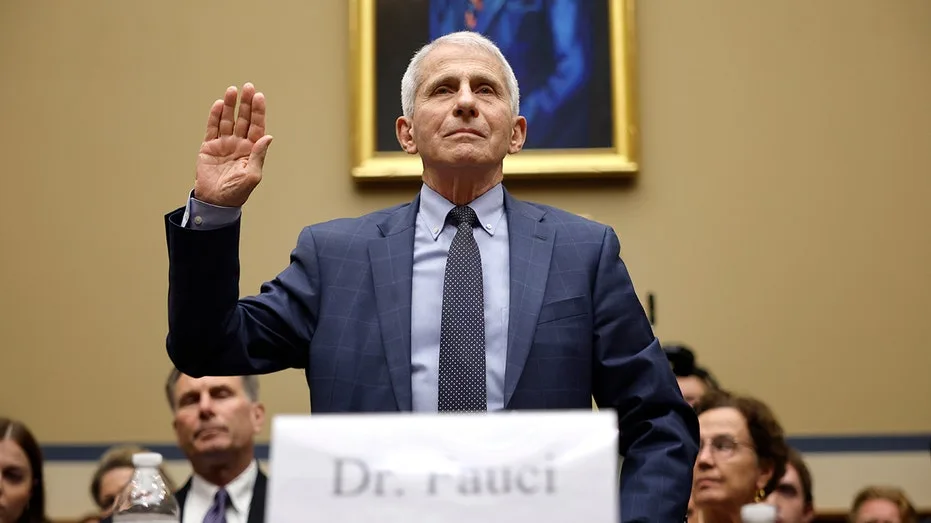
A Senate committee recently voted to recommend Dr. Anthony Fauci be held in contempt of Congress, following his refusal to answer questions during a hearing. The committee's action stems from Fauci's decision to invoke his Fifth Amendment rights, a move that has ignited a contentious debate over congressional oversight, constitutional protections, and the Justice Department's role in such disputes.
Understanding Contempt of Congress
Being held in contempt of Congress is a serious matter that typically arises when an individual refuses to comply with a congressional subpoena, either by declining to testify or by withholding requested documents and information. When lawmakers believe a person has obstructed their inquiry, they may vote to hold that individual in contempt.
Should a person be cited for contempt, Congress can then refer the matter to the Justice Department. This referral serves as a formal recommendation to federal prosecutors, suggesting that the individual's actions warrant potential criminal charges.
The Senate Homeland Security and Governmental Affairs Committee initiated proceedings against Dr. Fauci after he declined to answer questions at a hearing, despite being under subpoena. Republican senators argued that Fauci was obligated to respond to their inquiries, especially given his pardon by then-President Joe Biden. Instead, Fauci repeatedly invoked his Fifth Amendment right against self-incrimination.
"On the advice of counsel, I respectfully decline to answer based upon my rights under the Fifth Amendment of the Constitution," Fauci stated.
This exact 21-word statement was uttered an astonishing 111 times throughout his testimony, totaling 2,331 words without deviation.
Democrats on the committee characterized the Republican inquiry as a strategic maneuver. Senator Maggie Hassan, a New Hampshire Democrat, suggested the true intent was to provoke a misstatement from Dr. Fauci. "The goal was to wait for Dr. Fauci to make any kind of misstatement and then have a weaponized Department of Justice file criminal charges for that new statement that would not have been covered by the pardon," she explained.
Ultimately, the committee proceeded with a partisan vote of 8-5 to hold Fauci in contempt. Senator Rick Scott, a Florida Republican, underscored the gravity of the situation, stating, "I've never voted to hold somebody in contempt. But if there's one person that should be held in contempt, it is Anthony Fauci."
Procedural Concerns and Partisan Divide
Senator Gary Peters of Michigan, the ranking Democrat on the Senate Homeland Security Committee, cautioned against the committee's approach, deeming it perilous. "Criminal contempt is punitive. It does not compel a witness to answer questions or produce the documents we'd all like to see," Peters argued. He warned that such an action could establish "a damaging precedent that future witnesses will use to resist legitimate congressional oversight and weaken this committee's ability to compel testimony."
Despite these warnings, Senator Rand Paul of Kentucky, the Republican Chairman of the Senate Homeland Security Committee, remained resolute. He affirmed his intention to personally deliver the contempt referral to the Attorney General and the district court in the District of Columbia, even though the Justice Department had only an acting Attorney General at the time.
However, Senator Paul's proposed method of referral deviates from established Senate practice. Customarily, the entire Senate votes to approve a referral to the Justice Department for prosecution, not just a committee or an individual senator. Previous attempts by the Kentucky Republican to unilaterally refer Fauci for prosecution, without even committee approval, also lacked precedent. Observers note a lack of historical examples for such an independent maneuver, particularly one that bypasses a vote on the Senate floor.
Even if a full Senate vote were to occur, securing the necessary support presents significant challenges. While Republicans control the Senate, it remains uncertain whether 51 votes could be garnered to hold Fauci in contempt. Furthermore, it is highly improbable the Senate could achieve the 60 votes required to overcome a filibuster on a contempt resolution of this nature.
These procedural concerns led Democrats to criticize Senator Paul's actions. Senator Peters emphasized, "No individual senator and no committee speaks for the entire Senate as a whole." He further condemned any attempt to refer the matter to the Justice Department without full Senate approval, calling it "even more dangerous and widely unprecedented."
The Justice Department typically states it "seriously reviews all congressional referrals." However, Democrats contend that the Republican committee's disregard for Fauci's invocation of his Fifth Amendment rights could undermine any potential prosecution. Senator Richard Blumenthal, a Connecticut Democrat, stated, "It is almost certainly never going to be approved by a court because it violates basic constitutional rights."
David Schertler, Dr. Fauci’s attorney, issued a statement accusing Senator Paul of attempting to "weaponize the Justice Department" against his client. Democrats also claimed that Republicans excluded them from the inquiry leading up to Fauci's hearing. "We have been excluded from witness interviews," Senator Peters noted.
Conversely, Republicans asserted that Democrats showed little interest in the committee's findings. Senator Paul countered, "They have all been uploaded on a website that you were invited to join. You never even asked for the password."
Emerging Information and the New Attorney General
The Republican inquiry is ongoing, with new developments surfacing since Fauci's testimony in late July. Another Senate panel has now acquired a copy of the Health and Human Services department phone Fauci used during the pandemic. Senator Ron Johnson, a Wisconsin Republican, commented on the acquisition, saying, "It's frustrating we haven't gotten these devices until now. But now we have them." Senator Johnson expressed optimism that decrypting the phone could provide answers to questions Fauci declined to address during the hearing.
Two other significant events have unfolded since Fauci's appearance before the committee. First, Jeannine Pirro, the U.S. attorney for the District of Columbia, unexpectedly dropped the prosecution of former Olympian David Hearn, who was accused of vandalizing the Reflecting Pool on the National Mall. This decision drew a rebuke from President Donald Trump.
This development has fueled speculation regarding the potential prosecution of Fauci. Some observers question whether Pirro's adherence to legal procedures in the Hearn case might diminish the likelihood of a Fauci prosecution, while others ponder if her decision, which angered the former President, could prompt her to seek "redemption" by pursuing charges against Fauci, aligning with Trump's stated desire for his prosecution.
Ultimately, the decision to prosecute will rest with the newly confirmed Attorney General, Todd Blanche. His confirmation process itself was notable: Senators Lisa Murkowski of Alaska and Susan Collins of Maine had initially vowed to oppose Fauci. With former Senate Majority Leader Mitch McConnell of Kentucky no longer in his leadership role, the Republican party could not afford to lose additional votes without jeopardizing Blanche's nomination. The deciding factor became Senator Bill Cassidy, a Louisiana Republican, who had been undecided.
Senator Cassidy announced his support for Blanche, stating his concerns about the politicization of justice. "I am particularly concerned about episodes of apparent lawfare, DOJ bringing suits against political enemies. Presidents of both parties have been guilty of this. It must stop. It should stop now. A never-ending cycle of prosecuting political enemies undermines the rule of law," Cassidy remarked. While acknowledging he wasn't "entirely satisfied where where this is," he found sufficient comfort to confirm Blanche.
Democrats are likely to frame any prosecution of Dr. Fauci as an example of the very "weaponization" of the Justice Department that Senator Cassidy expressed concern about. This case is poised to serve as an early and significant test for the incoming Attorney General.